
It’s 10pm on a cold November evening. You go to fill the kettle and find water pooling across the kitchen floor from a pipe under the sink. Your first thought is who you can get out to fix it, and fast. Your second, once the panic settles, is probably: who’s going to pay for the floor?
Those two questions sit at the heart of one of the most common mix-ups in household insurance. Plenty of people assume their home insurance will take care of both. In reality, the job is usually split between two types of cover that work in very different ways.
Two problems, two types of cover
Every home emergency really creates two problems. There’s the emergency itself: the burst pipe, the boiler that’s given up, the lock that won’t work. Then there’s the damage it leaves behind, such as soaked flooring, stained ceilings or ruined furniture.
Home insurance is built for the second problem. Buildings insurance covers the structure of your home and contents insurance covers your belongings, so when a leak, a fire or a break-in causes loss or damage, that’s where you claim. What home insurance doesn’t usually do is send someone round in the middle of the night to stop the water.
What is home emergency cover?
Home emergency cover fills that gap. It’s designed for the emergency itself: the sudden, unexpected problems that need putting right quickly and aren’t covered by your buildings or contents insurance.
With Coplus Home Emergency cover, you call a 24-hour helpline and an approved engineer is arranged to make your home safe and fix the problem. It deliberately doesn’t pay for damage the emergency causes to your home, because that’s what your home insurance is for.
Put simply, home emergency cover fixes the problem, and home insurance deals with the damage it leaves behind.
Why the difference matters when something goes wrong
In an emergency, time matters. A leaking pipe gets worse by the minute, and a home with no heating in the middle of winter soon becomes uncomfortable, particularly for families with young children or older relatives. Knowing which number to ring, before you need it, saves precious time and a lot of stress.
It also helps to know what home emergency cover is, and isn’t, there for. It isn’t a maintenance policy. It’s for things that go wrong suddenly and unexpectedly at your main home, not for general wear and tear, limescale build-up or problems you already knew about. Thinking of it as your emergency call-out service, rather than an all-round repair plan, is the easiest way to get it right.
Is home emergency cover just boiler cover?
Many people think of home emergency cover as boiler cover, and the boiler is certainly a big part of it, especially as the temperature drops. But it reaches much further than that. Coplus Home Emergency covers:
- Your boiler and central heating
- Plumbing and drainage
- Your home’s electrical wiring
- The water supply pipe between your stopcock and the mains
- The internal gas supply pipe, once a leak has been made safe
- Emergency repairs to external locks, doors, windows, the roof and guttering
- Help getting back in if you lose your only key
- Removing wasps, hornets, rats and mice from inside your home
Each claim is covered up to £1,000 for the call-out, labour, parts and materials. If your boiler turns out to be beyond economic repair, there’s £500 towards a new one, and if a covered emergency leaves your home unliveable for more than 48 hours, there’s up to £250 towards somewhere else to stay.
Do you need home emergency cover as well as home insurance?
For most homeowners, the two work best side by side rather than one replacing the other. Home insurance protects you from the financial hit of serious damage or loss. Home emergency cover gets the right person to your door quickly when something breaks, and takes away the worry of finding a reliable tradesperson at short notice, often at the worst possible time of day.
Back to that kitchen floor. Your home emergency provider sends an engineer to fix the pipe, and your home insurer looks after the damaged floor. Two problems, both handled.
Preventing an emergency in the first place
Of course, the best emergency is the one that never happens, and a little preparation before winter really does go a long way.
Bleed your radiators
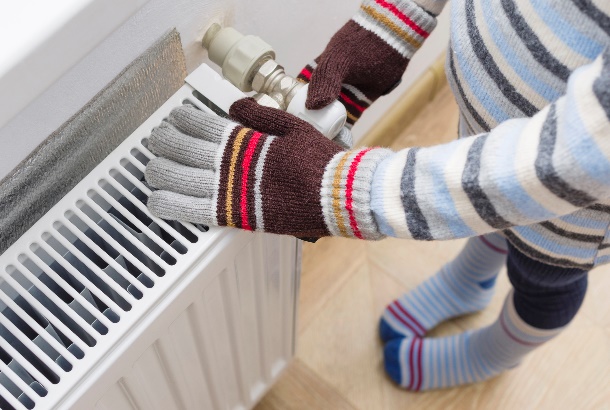
If your radiators are cold at the top, trapped air is stopping them heating properly. Bleeding them takes minutes: with the heating off and the radiators cool, open the bleed valve with a radiator key until water appears, close it again, then check your boiler pressure.
Protect your pipes and taps
Think about the pipes in the coldest parts of your home. Foam lagging on pipes and tanks in lofts, garages and other unheated spaces helps stop them freezing. Turning off and draining your outside taps, and fitting a tap cover, protects them through a cold snap, and it’s worth fixing any dripping taps while you’re at it.
Find your stopcock
Find your stopcock now, rather than when water is coming through the ceiling. Check it turns easily so you can shut the water off quickly if a pipe bursts. If you’re going away over winter, leave the heating on low.
Book your boiler service
Book your annual boiler service with a Gas Safe registered engineer before the cold sets in. As well as keeping your boiler running smoothly, it matters for your cover, because boilers that haven’t been serviced in line with the manufacturer’s recommendations aren’t covered.
Know who to call
Home insurance and home emergency cover each have a clear job to do, and understanding the difference means you’ll know exactly where to turn when something goes wrong. If you’re already covered with Coplus, keep our 24-hour helpline number, 0333 241 3365, somewhere easy to find this winter.
For more information on Coplus Home Emergency cover, visit our home emergency page.
Terms, conditions, limits and exclusions apply. See your policy wording for full details.